
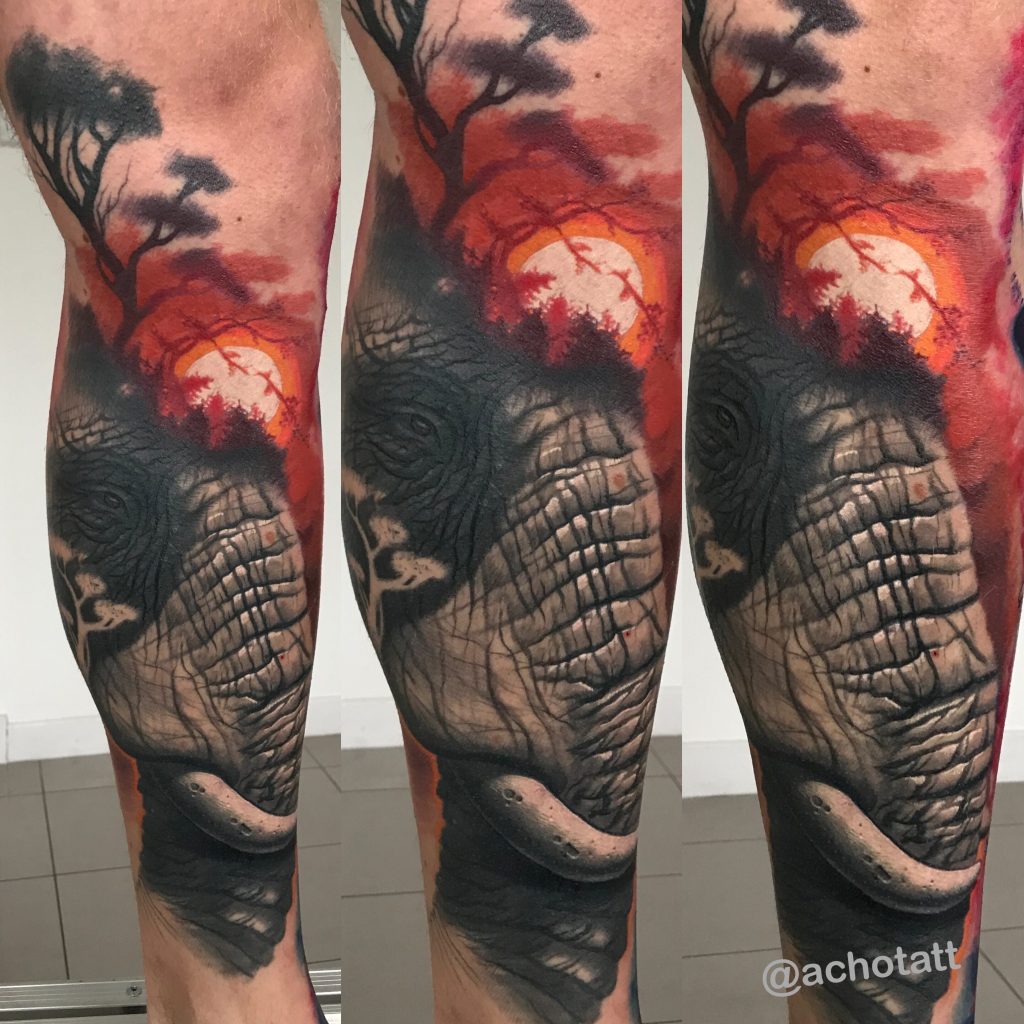
You’ve seen them on Instagram. A rose with dew drops you’d swear you could wipe off. A portrait so detailed it looks like a photograph printed under the skin.
That’s colour realism. And if you’re searching for colour realism tattoos in Glasgow, you’ve probably already noticed something. The gap between a good colour realism tattoo and a disappointing one is huge.
This guide explains what colour realism is, what separates great work from average work, and how to find the best realism tattoo artist in Glasgow for your idea. We’ll also cover how to prepare, what to expect in the chair, and how to keep your tattoo vibrant for years.
What Are Colour Realism Tattoos?
Colour realism tattoos are tattoos that recreate real-life subjects in full colour, using smooth shading, accurate light and realistic depth. The goal is simple: your tattoo should look like the real thing, not a cartoon of it.
Typical subjects include:
- Portraits of loved ones, memorial pieces and tributes
- Flowers, wildlife and animal portraits
- Landscapes, seascapes and skies
- Eyes, lips and other close-up detail
- Fantasy and film-inspired scenes treated in a realistic style
Unlike traditional tattooing, which uses bold outlines and flat colour, realism uses soft colour blends, tonal contrast and precise shading. Think of it as painting with ink, one layer at a time.
Why Colour Realism Is So Popular in Glasgow
Glasgow has a strong, creative tattoo culture. People here want work that’s personal, detailed and built to last. A single sleeve or a memorial portrait isn’t a spur-of-the-moment choice. It’s something to live with, so clients research carefully.
Colour realism suits that mindset. It lets you turn a real memory, a pet, a person or a place into permanent art. It also looks striking on skin. Done well, colour adds an emotional pull that black and grey sometimes can’t match, like sunlight on water or the warmth of a face.
What Makes the Best Realism Tattoo in Glasgow?
When people search for the best realism tattoo Glasgow has to offer, they’re usually asking one question: who can I trust to get this right?
“Best” isn’t about who has the loudest marketing. Here’s what to look for.
1. A portfolio full of healed work
Fresh tattoos always look good in photos. Ask to see healed pieces too. Healed work shows whether the colours held, the shading stayed smooth and the lines stayed clean.
2. A deep understanding of light and skin
Realism is about light, shadow and form. A skilled artist knows where light hits a face, how to build depth with tone, and how colour behaves differently on different skin tones.
3. Patience and time
Realistic work can’t be rushed. If a studio books you in for a complex portrait in a short slot, be cautious. Good artists protect the quality of the work over the number of bookings.
4. A proper consultation
A great artist listens first. They ask what the tattoo means to you, look at your reference photos and plan placement around your body, not just the design.
5. Consistency across styles
An artist who is confident in black and grey, colour, portraits and cover-ups usually has a strong foundation in tonal control. That foundation is what makes colour work look believable.
Meet the Artist Behind the Work
At Watcher Tattoo, the studio’s approach comes from founder and lead artist Angel Mitov. His story is unusual.
At 15, Angel lived somewhere with no tattoo mentors. Rather than give up, he built his first machine from spare electronic parts and practised on fruit for months, learning control, depth and detail before ever working on skin. In 2010 he bought professional equipment, and his mother became his first real client. He went on to win multiple awards at the Bulgarian Tattoo Convention.
That early discipline still shows. Realism rewards patience, and Angel’s work is built on it.
How a Colour Realism Tattoo Is Created: Step by Step
Knowing the process takes away a lot of the nerves. Here’s what typically happens.
- Free consultation. You share your idea, reference images and preferred placement. The artist talks through what’s possible and how the design will sit on your body.
- Design planning. The reference is adapted for skin. Contrast, colour palette and composition are planned so it still reads clearly in 10 years’ time.
- Stencil and placement. The outline is placed on your body. You check size and position before any ink goes in.
- Layered shading and colour. The artist builds the tattoo gradually, starting with structure and tone, then adding colour in smooth layers.
- Final detail and highlights. Small details, highlights and finishing touches bring the piece to life.
- Aftercare guidance. You’re given clear instructions to protect healing and colour.
Larger pieces, like sleeves and detailed portraits, usually take several sessions. That’s normal for quality realism.
Colour Realism vs Black and Grey Realism
Not sure which suits your idea? Here’s a quick comparison.
- Colour realism suits subjects where colour carries emotion: flowers, sunsets, eyes, wildlife, vivid scenes.
- Black and grey realism suits subjects where contrast and form matter most: classic portraits, statues, skulls, dramatic moods.
Many people mix the two, for example a black and grey portrait with a single touch of colour. A good artist will tell you honestly which will look best on your skin and last longest. You can see both styles in the gallery.
How to Prepare for Your Colour Realism Tattoo
A little preparation makes a big difference to the result.
- Bring clear, high-quality reference photos. Sharp images give the artist more to work with.
- Think about placement early. Flat, well-exposed areas such as the forearm, thigh or calf often suit detailed realism.
- Moisturise your skin in the weeks beforehand.
- Avoid sunburn on the area you’re getting tattooed.
- Eat, hydrate and rest before your session.
- Be open to advice. If your artist suggests changing the size or placement, there’s usually a good reason.
Aftercare: How to Keep Colours Bright
The tattoo doesn’t end when you leave the studio. Healing and long-term care decide how the final piece looks.
- Follow your artist’s aftercare instructions exactly.
- Keep the area clean, and don’t pick or scratch.
- Avoid soaking in baths, swimming pools and the sea while it heals.
- Keep it out of direct sun during healing.
- Once healed, use sun protection every time. UV light is the main reason colour tattoos fade.
Treat your tattoo like good skincare: protect it daily and it will reward you.
Can Colour Realism Be Used for Cover-Ups?
Sometimes, yes. Realism can be a powerful way to rework an old or disliked tattoo, but it depends on the size, darkness and condition of the original piece. Dark, heavy ink is harder to cover than faded work, and the new design is often larger and darker than the old one.
If you have a tattoo you’d like to change, book a consultation so an artist can assess it honestly. You can read more about cover-ups and rework.
Why Clients Choose Watcher Tattoo in Glasgow
Plenty of studios offer realism. Here’s what clients tell us makes the difference.
- Your idea comes first. The studio doesn’t push its own style onto you.
- No rush, no pressure. Clients describe sitting with designs before deciding.
- A calm, professional process from the first message to the last session.
- Proven range across portraits, cover-ups, black and grey, and colour.
One client came in with an unfinished sleeve that a previous artist had abandoned. Angel studied the existing work and the original idea, then rebuilt it over several sessions into a sleeve that flows naturally with the body. That kind of problem-solving is what real expertise looks like.
Ready to Start Your Colour Realism Tattoo?
If you’re looking for colour realism tattoos in Glasgow, the best first step is a conversation. Look through the portfolio, gather a few reference images and tell us what you have in mind. There’s no pressure and no commitment.
Whether it’s a memorial portrait, a vivid floral piece or a full sleeve, the right artist will help you turn it into something you’re proud to wear for life.